Common Hydroseeding Failures
When hydroseeding fails, it almost never fails mysteriously. The failure traces to a specific, preventable cause — and once you know the short list of usual suspects, diagnosing a struggling job gets a lot easier. This page is the honest diagnostic rundown: what goes wrong, why, and what would have prevented it.
The failures sort into four categories: it never germinates, it washes out, it comes in thin and patchy, or it declines after a promising start.
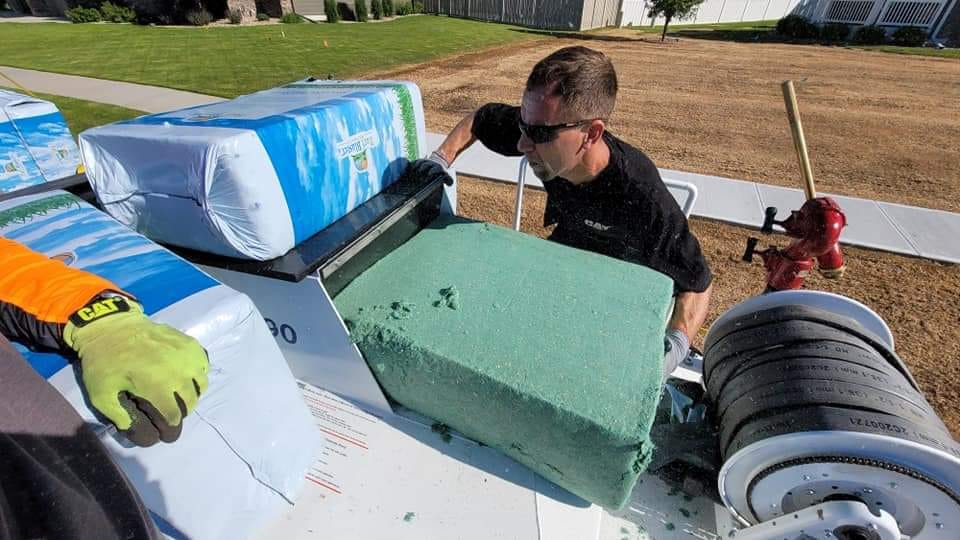 Failures usually start upstream of the seed - in the mix, timing, site prep, application rate, or watering plan.
Failure to Germinate
The job goes in, and weeks later there's little or nothing coming up.
Inadequate watering. This is the number one cause on residential projects, by a wide margin. The surface dries out between watering cycles, the germinating seed dries with it, and dead seed doesn't restart. The fix: multiple short watering cycles daily through germination, never letting the mulch dry out. (See Watering and Establishment.)
Wrong timing. Cool-season grass sprayed in the heat of July. Warm-season grass sprayed into cool March soil. Seed that's outside its germination temperature range simply won't perform, no matter how good everything else is. Entirely preventable by planting in the right window. (See The Science of Seed Establishment.)
Dead or low-quality seed. Old seed, improperly stored seed, or seed that was never tested. Quality seed comes with a tag listing its germination percentage and test date — if there's no tag, you don't actually know what you're planting. This is one reason a suspiciously cheap quote can cost you.
Washout
The slurry — and sometimes the topsoil with it — ends up at the bottom of the slope after a rain.
Wrong product for the slope. Running a flat-ground recipe on a 3:1 grade. Slopes need the right mulch and tackifier rates, and steeper or higher-risk slopes need bonded products built for the job. A standard lawn mix has no business holding a steep cut. (See Slope Stabilization and BFM, SMM, and HPM Explained.)
Rain before curing. Bonded fiber matrices typically need 24 to 48 hours to bond properly. A heavy rain inside that window can wash a freshly sprayed BFM right off the slope. Reading the forecast and timing the application around the curing window is part of doing slope work correctly.
Concentrated water flow. Drainage from above — a downspout, a swale, runoff from an adjacent area — channeled onto the application. Even a well-bonded product can't survive concentrated flow it wasn't designed for. The water has to be managed or diverted, not ignored.
Outside reference: USDA NRCS hydromulching guidance describes the same basic erosion-control system - water, fiber mulch, and tackifier sprayed on slopes to prevent soil erosion or foster revegetation - and notes that material choices and rates should be matched to the site by erosion-control experts. See NRCS: After the Fire - Hydromulching.
Thin and Patchy Results
It germinated, but unevenly — good in places, bare in others.
Uneven application. Thin spots got too little mulch and seed; the coverage wasn't consistent. This is an operator-skill issue — building even coverage at the right rate is exactly what application technique is about. (See Application Technique.)
Wrong seed for the conditions. A shade mix struggling in full sun, or a sun mix failing under trees. The blend has to match the actual site, including its microclimates. (See Seed Selection.)
Micro-site variability. Some unevenness is normal — soil, moisture, and sun are never perfectly uniform across a yard. A degree of variation isn't a failure; large bare patches are.
Decline After Establishment
It came in well, then went backwards.
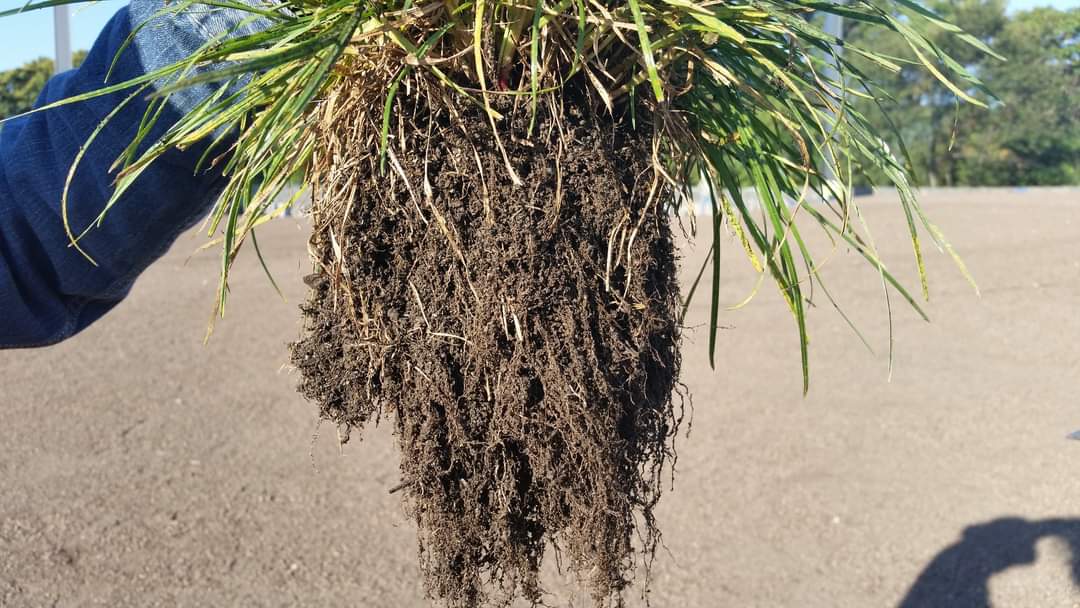 The visual goal is not just green blades. Real establishment means a root system deep enough to keep the stand alive after babysitting stops.
Soil problems catching up. Compaction, bad pH, or nutrient deficiency that the starter fertilizer masked for a few weeks eventually reasserts itself. Good soil preparation and a soil test up front prevent this.
Watering transition too fast. Cutting back on water abruptly while roots are still shallow leaves the young grass unable to reach moisture deeper down. Ease the transition. (See Watering and Establishment.)
Mowing damage. Mowing too early, cutting too short, or using dull blades that tear rather than cut all stress a young lawn. Let it establish and reach mowing height first, and keep the blades sharp.
The Takeaway
Most hydroseeding failures aren't mysteries and aren't bad luck. They trace back to a short list: watering, timing, seed quality, or a mismatch between the recipe and the site. The method itself is reliable — it's been proven across millions of acres. What varies is the chain of decisions surrounding it, from the contractor's recipe and application to the homeowner's watering.
That's actually good news. If the causes are specific and preventable, then so is success. Get the timing right, match the recipe to the site, use quality seed, and water properly — and hydroseeding does exactly what it's supposed to.
If you're dealing with a failed or underperforming job and need professional help diagnosing or remediating it, call 1-800-NEW-TURF or visit 1800newturf.com.
Quick Diagnosis: Match the Symptom to the Cause
If you're staring at a job that isn't working, start here:
| What you're seeing | Most likely cause | Check this first |
|---|---|---|
| Nothing came up at all, anywhere | Almost always watering (the surface dried out and killed germinating seed) or wrong-season timing. Less commonly, dead seed. | Your watering schedule — then whether the seed was planted in its temperature window. |
| Came up thin or spotty, but evenly bad | Low application rate (too little seed/mulch), wrong seed for the conditions, or under-watering across the whole area. | The application rate that was actually used against what the site called for. |
| Good in some areas, bare in distinct patches | Uneven application, dry spots that didn't get water, or microclimate differences like shade. | High spots, edges, and south-facing areas — the places sprinklers miss first. |
| Started well, then went backwards | Watering cut back too fast, soil problems catching up, or mowing damage. | When watering was reduced, and whether it was mowed early or short. |
| Washed down the slope after rain | Wrong product/rate for the grade, rain during the BFM curing window, or unmanaged water flowing onto the area from above. | The rainfall timing versus the 24–48 hour curing window. |
Is It Failing, or Just Slow?
Before diagnosing a failure, check the calendar against the seed. A job that looks dead at day 10 may be a bluegrass stand behaving exactly as it should. Germination time is species-dependent:
| Species | Typical germination | Bare ground at this point means |
|---|---|---|
| Ryegrass | 5–7 days | Past ~10 days, something is wrong |
| Fescue | 7–14 days | Past ~18 days, something is wrong |
| Bluegrass | 14–28 days | Still normal well into week three |
Because blends often pair a fast germinator like ryegrass with slower, more desirable species, you'll usually see early cover come in first and the slower grasses fill behind it. Nothing at all across the entire area by day 21 points at watering or wrong-season timing rather than slow seed. (See The Science of Seed Establishment.)
Matching what you see to this list usually points at the cause within a guess or two — and most of these are fixable with a touch-up or a corrected approach rather than a complete redo, if they're caught early. That's the real argument for monitoring a job through establishment instead of assuming application day was the finish line.
Hydroseeding Failure FAQ
Why did my hydroseed fail?
Most failures trace to a short list of preventable causes: inadequate watering, wrong-season timing, dead or low-quality seed, or a mismatch between the recipe and the site. On residential jobs, watering is the first place to look because seed that dries after germination begins does not restart.
How long does hydroseed take to germinate before I should worry?
Ryegrass can show in 5 to 7 days, fescue commonly takes 7 to 14 days, and bluegrass can take 14 to 28 days. A blend may look partly successful before the slower grasses appear. Nothing across the whole area by day 21 is a stronger warning sign than slow bluegrass at day 10.
Why is my hydroseed not growing in some spots but fine in others?
Patchy results usually point to uneven application, sprinkler misses, dry high spots and edges, shade differences, or other microclimate changes across the site. Some variation is normal. Large, distinct bare patches are not.
Why did my hydroseed wash down the slope after rain?
Most washouts come from the wrong product or rate for the grade, rain during the curing window, or unmanaged water flowing onto the work from above. On slopes, water management matters as much as the slurry recipe.
Can a failed hydroseed job be fixed without starting over?
Often yes. Many failures can be corrected with touch-up seeding, adjusted watering, repaired drainage, or a better product choice, especially when the issue is caught early and diagnosed correctly.
Next: continue with Reseeding & Recovery.
Related: Watering and Establishment · Residential Lawn Hydroseeding · The Science of Seed Establishment